Ukweli Coalition is a media hub to promote in-depth journalism in East Africa in general, and in Great Lakes Africa in particular, through a collaborative approach.
Publications
Our Stories
Stories we have published.
Word of Pros
A space for media professionals championing journalism in Africa’s Great Lakes region.
Voices Under Attack
Reports and investigates attacks on journalists and media in Africa’s Great Lakes region.
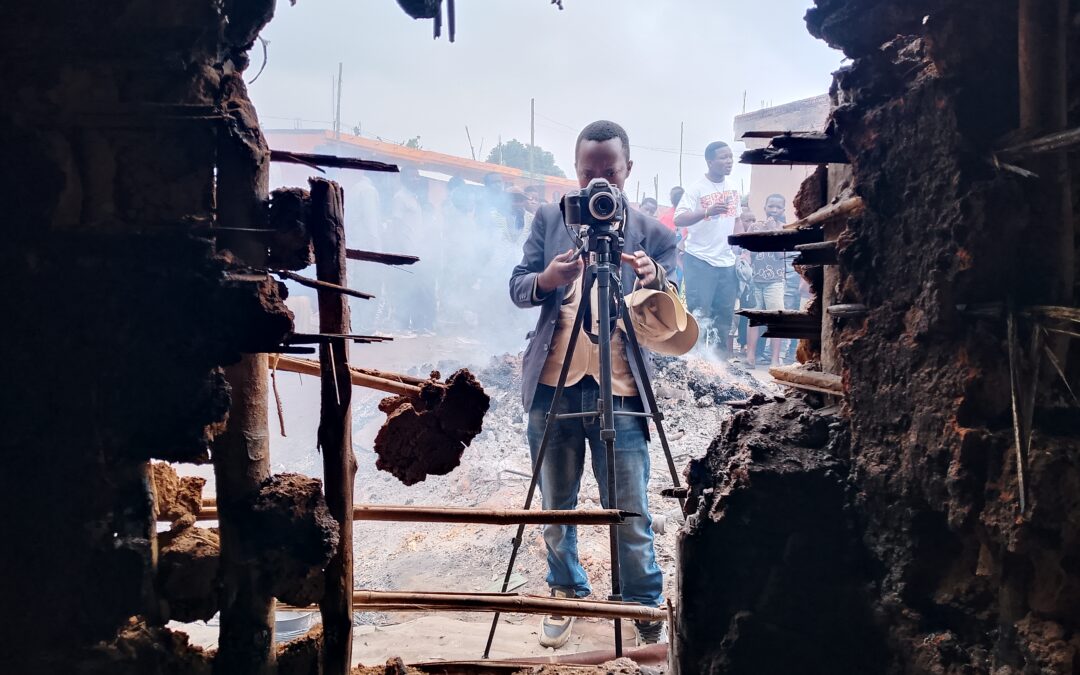
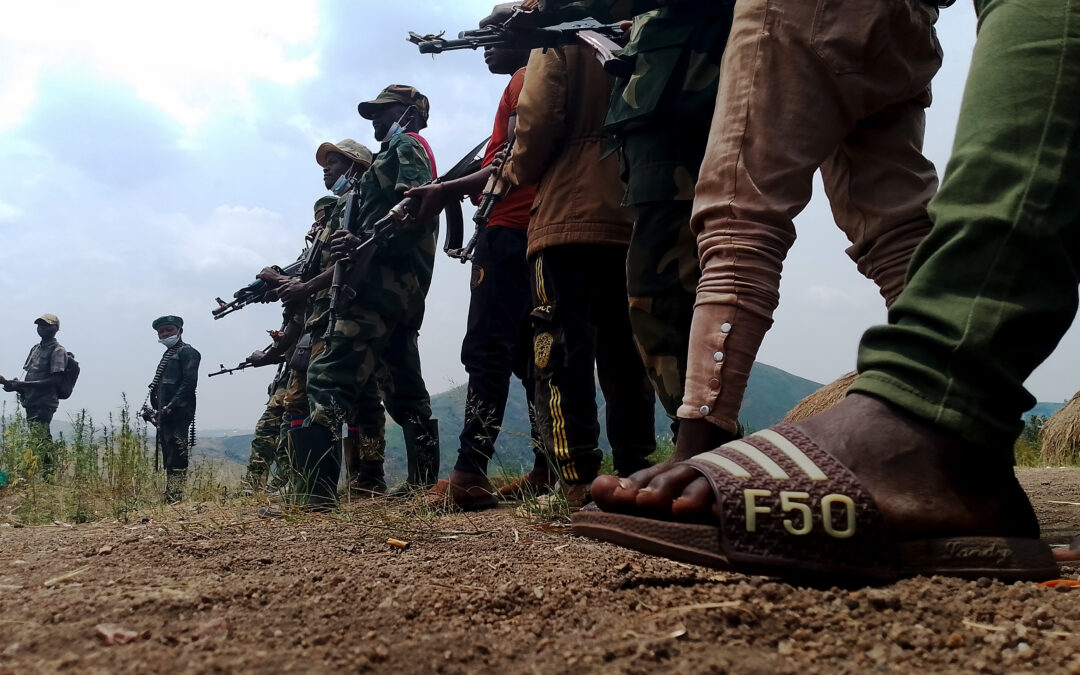
Since the capture of Goma in January 2025 by the AFC (Alliance Fleuve Congo)/M23, and the subsequent capture of Bukavu, journalists in eastern DRC have been working under untenable conditions. Broadcasting bans, muzzled sources, direct threats, self-censorship, suspicion of collaboration with the rebels, and a rift with journalists’ organizations based in Kinshasa. Whilst the world celebrates World Press Freedom Day on 3 May, we return to the field, between Goma and Bukavu, to find a press that bends but does not break, crushed between the hammer of the rebel movement and the anvil of the government.
By Ukweli Coalition Media Hub in collaboration with ZAM Magazine
It is 8.30 am in a neighborhood of Goma. For the first time since the war, the editorial team is meeting at this late hour. The early-morning meetings, which used to be scheduled for 6.30 am, are now in the past. On the street leading to the newsroom, there is little traffic. The silence is broken only by the occasional hesitant passer-by. On the kerb, faint traces of recent clashes. At the entrance to the radio station two bullet holes still mark the glass panel above the staircase. Visible traces of violence that is still fresh in mind.
Inside, the atmosphere has changed. Where once morning meetings were animated by debates and analyses of current affairs, the tone is now measured. The journalists exchange few words. Anxiety is evident on their faces. The reunion, after several days of separation forced by the war, takes place without any real outpouring of emotion. During the meeting, editorial priorities are quickly redefined. “Let’s avoid playing with fire,” warns the editor-in-chief, calling for caution. Sensitive topics, particularly military and political ones, are set aside in favour of local news. But the uncertainty is not limited to editorial content. It is financial too. “We don’t know when our donors will get back in touch, but we must carry on working,” he adds, in a grave tone.
A few months ago, all media outlets in Goma and Bukavu were afraid to resume their work. When the fighting died down, a few weeks after Goma was taken, the local radio station came back on air, but only to broadcast music. “With the power and internet cut off, residents were left in a sort of black hole. We decided to provide a minimal service on the radio with music that might offer them some comfort during what they were going through,” says a broadcast technician at a leading radio station in North Kivu province.
Then the journalists gradually returned, following the tentative resumption of commercial and social activities in the major cities under occupation. But the newsrooms they find no longer resemble those they left behind. Some have chosen to fall in line, whilst others struggle, sometimes even at great personal risk, to remain objective. The national radio station broadcasting from Bukavu and another commercial radio station were the first to relaunch news programmes, but with an editorial line entirely geared towards promoting the AFC/M23, which controls the area. “Our mission is to provide media support for the new authorities,” says a reporter from this public broadcaster without hesitation.
“Pulling out a camera is just as dangerous as pulling out a gun”
The reality is more complex, the journalists contacted agree. “The AFC/M23 has laid down clear rules, including a ban on broadcasting news from Kinshasa so as not to relay what they consider to be regime propaganda. They have banned the broadcasting of humanitarian alerts from the United Nations Office for the Coordination of Humanitarian Affairs (OCHA), so as not to give Kinshasa any pretext for opening a humanitarian corridor,” says a former editor-in-chief, recalling that before the war, “Goma was a rapidly expanding media hub”. He recalls, regretfully: “We were like watchdogs.”
In Bukavu as in Goma the absence of official AFC/M23 spokespeople capable of answering journalists’ questions further complicates the situation. The movement has few, if any, identified local spokespeople, local journalists report. Communication is one-way. “When they need to communicate with us, they invite us and tell us what we must do and what we must not do,” says one of them, adding: “Some journalists maintain discreet links with colleagues who have become the movement’s press officers. It is through this informal channel that they sometimes receive invitations to cover official events, such as a mayor’s visit or a speech by the governor under AFC/M23. But this proximity is a double-edged sword, as the local population suspects these journalists of picking sides.”
Censorship also operates through constant physical surveillance. “Putting a voice recorder or a camera out in the street is now just as dangerous as someone pulling out a gun,” compares yet another journalist, who still vividly recalls the scene of a junior AFC/M23 officer stopping a colleague in the middle of the street: “I’ve been told you wanted to do a report here. That sort of thing is forbidden. You must leave before I call the authorities,” he had ordered, his face stern.
Another telling incident involves RTNK (Radiotélévision Ngoma de Bukavu) and an AFC/M23 spokesperson. It is 27 February 2025, the day of the movement’s first major rally at Independence Square — a gathering that would later be marred by two explosions leaving at least eleven dead — when cameramen from the movement ask to go up onto the roof of the RTNK building to film the podium from different angles. One of the managers refused, citing security concerns. The cameramen reported the incident to their superiors. An AFC/M23 spokesperson arrived at the premises himself, accompanied by a large number of officers. “Let’s put a stop to this nonsense once and for all!” exclaimed one of the officers. The manager had no choice but to apologize.
According to NGO Reporters Without Borders, which published an investigation last March into the M23’s detention of two journalists in shipping containers, “more than half of the attacks (murders, assaults, arrests, detentions, enforced disappearances, threats, and media outlets being shut down, looted or ransacked) targeting journalists in the country between January 2024 and January 2025 took place in eastern DRC (the provinces of North and South Kivu and in Ituri)”. That amounts to 42 out of 78 attacks, wrote the researchersin the report, without, however, placing all the blame on M23, which is not the only rebel movement in eastern DRC.
Contacted on several occasions, the M23 declined to comment.
A blend of ‘tactics’ for survival
Pressure, intimidation, summonses – in addition to imposed censorship, the majority of newsrooms still operating have adopted self-censorship, as a survival strategy. Politics, security, humanitarian issues… these topics are avoided in favour of social, cultural and environmental themes. “It’s also important, very important even. But at a certain level, the problem is that the environment can also become political. In short, everything is sensitive if you want to delve deeply into your subject,” explains another journalist from Bukavu. Some community radio stations, he laments, have even abandoned the participatory format that defined their identity. “No more live calls – too risky. We avoid security issues, political issues and topics that favour one side over the other. We leave those kinds of topics to official media outlets, which feel much safer than we do.”
Whilst others have chosen to wait for the storm to pass, documenting and archiving whatever they can, there are those who have adopted a more ‘subtle’ tactic: systematically avoiding the fundamental questions of journalism – the ‘who does what?’ – so as not to have to name those who control the area. Sometimes they will describe what has happened, without writing down who is responsible. “This trick spares us the burden of fundamental questions, the answers to which enable us to gather and write the news. Answering ‘who is doing what’ might force us to mention the new occupiers, and possibly end up defending them,” reveals a reporter for a community radio station in Goma. He adds: “Reporting can now be seen as a crime. The press in Goma is in a state of hibernation. Here, the sound of the truth hurts more than bullet wounds.”
The price to pay is often heavy for those who try to swim against the tide, remain independent, and defy censorship. Amisi Musaada, a journalist for the online media outlet déboutrdc.net and a socially conscious musician, knows what that may look like. In July 2025, he was abducted, held captive for several days and tortured before being released, due to his articles deemed too critical of the AFC/M23 war. Honneur-David Safari, head of the media outlet La Prunelle RDC, was followed by unknown individuals and then abducted in late December 2025. He was found some days later, alive but in poor condition. Shortly before, he had not hesitated to give a platform to those who criticized the ‘forced marches in support of the AFC/M23 movement’.
Radio Maendeleo, for its part, has been summoned several times to the Directorate of Intelligence Services (DSR, the equivalent of the National Intelligence Agency under the Congolese government), to account for the content of its programmes and the comments made by its guests. In November 2025, the mayor of Bagira under AFC/M23 directly threatened the presenter of the programme Hodi Mitaani for giving a platform to residents criticizing his administration. “We have been ‘invited’ four times to the DSR and once to the police. There’s nothing we can do; we just have to find a way to do our work in a war zone,” says a journalist from Radio Maendeleo in Bukavu.
Mistrust between Kinshasa and Eastern DRC
This is perhaps one of the major professional challenges arising from this war for journalists in Eastern DRC: a climate of mistrust that seems to be growing ever deeper with the authorities, including journalists’ organizations, almost all of which are based in Kinshasa. Media officials operating in areas under AFC/M23 control claim that ties have been severed, particularly after the president of the National Union of the Congolese Press (UNPC) in South Kivu “was forced under threat”, journalists from the region say, to collaborate with the movement. “Logically, Kinshasa has cut off contact,” explains a member of the organization in South Kivu, who also highlights the difficulty national bodies face in conducting investigations in areas controlled by the M23.
For their part, several journalists from Eastern DRChave criticized what they perceive as an excessive closeness between certain organizations and the national authorities, to the detriment of balanced coverage of the situation. “Why don’t they talk about the threats and arrests we face when we go into areas controlled by Kinshasa?” asks a journalist based in Bukavu. She claims that some reporters are suspected of colluding with the rebels, “because of where they live”, she says. Several of them say they have been detained, questioned and then released, their only ‘crime’ being that they live in areas under the control of the AFC/M23. “We have no choice. It is the rebels who control the area. To oppose them is to risk one’s life. We do not want to become collateral victims,” the journalist adds.
When contacted by Ukweli, Kamanda Wa Kamanda, president of the National Union of the Press of Congo (UNPC), took a hard line towards his colleagues in Goma and Bukavu, which are under AFC/M23 control: “I have also worked in conflict zones, but I remained professional. Journalists must defend their freedom. Either you are a journalist, or you are not.”
Several organizations defending journalists have suspended their activities in the region. This is the case with the Partnership for Integrated Protection (PPI), whose operations have been on hold for over a year. A member of its team cites security concerns, but also financial ones, particularly following the suspension of certain international aid programmes, including those from USAID. “We must protect ourselves first. Without resources, it becomes difficult to monitor the situation, particularly in the east,” he explains.
We attempted to contact the Minister for Communication and Media, Patrick Muyaya, to ask him to respond to the concerns of journalists who fear being arrested once they leave areas under AFC/M23 control, but he did not respond to our requests.
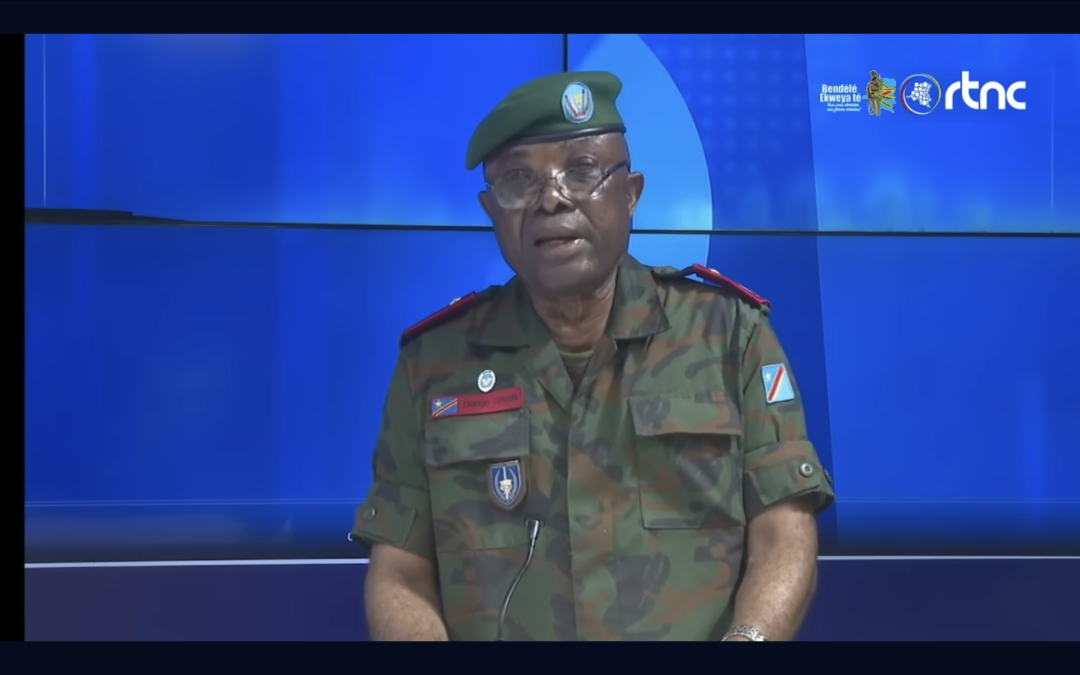
They are funded by taxpayers’ money and are referred to as “state media” or “government media.” In many African countries, they are often equipped with resources that very few private newsrooms can afford, only to end up serving as mouthpieces for political narratives. In the Democratic Republic of the Congo, the case of Major General Sylvain Ekenge—who used national television last December to attack one of the country’s communities before being suspended—has reignited the debate over the functioning of these media outlets “that have everything” but consistently fail to serve the people who, nonetheless, keep them afloat.
By Pascal Chirhalwirwa
Major General Sylvain Ekenge was suspended on December 29, 2025,from his duties as spokesperson for the Armed Forces of the DRC (FARDC). His superiors accused him of making remarks deemed discriminatory toward the Tutsi community during an appearance on a televised debate program on December 27 on Radio Télévision Nationale Congolaise (RTNC). “Remarks so serious as to echo those made against the same community on Radio Mille Collines in 1994 in Rwanda shortly before the genocide,” several observers noted.
Following the incident and the ensuing international outcry, it was time to determine who was responsible, particularly within the RTNC and the CSAC (the Higher Council for Audiovisual and Communication), the Congolese media regulatory body. Regarding the RTNC, sources close to the matter indicate that a number of internal measures have been taken, including the temporary suspension of journalist Oscar Mbal,who hosted the program that served as a platform for Sylvain Ekenge; the suspension of live broadcasts for programs covering sensitive topics such as security; and the requirement for interviews with guests to be recorded, reviewed, and approved by management prior to any broadcast. In contrast, the CSAC has remained silent. While its measures have previously targeted private media outlets, one might wonder why the CSAC has not publicly reacted to such a flagrant case, given that it typically announces its decisions when reprimanding a media outlet and/or a journalist.
When contacted, Serge Njibu, a rapporteur with the CSAC Bureau, defended the broadcaster, stating that “the measures taken by RTNC are the result of observations made by the CSAC following a meeting with the Director General of RTNC”. Mr. Njibu also adds that there are CSAC regulations outlining the conduct expected of the media during this period of crisis in the eastern part of the country, though he regrets that “the CSAC website has been attacked, causing it to be currently offline”, while reassuring that a digital portal is under construction and will be launched very soon to help disseminate the CSAC’s regulations.
RTNC, the perpetual true-false public service media outlet
This may be the central issue underlying the whole affair: should RTNC, which operates on Congolese taxpayers’ money, merely serve as a conduit for the political narrative? Or should it instead serve, with complete independence, the Congolese people by producing quality news (the RTNC is perhaps the only one with sufficient resources to do so), especially during this time of conflict when verified and credible information is invaluable? Of course, there is no easy answer, simply because the question, as clear as it may seem, is often left in the wrong hands. The RTNC remains under the direct authority of the Executive Branch of the government, which has its own political interests to protect. Yet, as the saying goes, “foolish is the sheep that confesses to the wolf”.
At the start of President Felix Antoine Tshisekedi’s first five-year term, Patrick Muyaya, the Minister of Information, Communication, and Media, announced with great fanfare a reform plan for his sector. These reforms were intended to enable the RTNC, long characterised by disproportionate national coverage, to transform itself into an effective media outlet that is representative of the entire national territory, competitive, meets international standards, and ultimately becomes a public service broadcaster. More specifically, this ambitious ministerial plan focuses on modernising and digitising RTNC studios in Kinshasa and across the provinces, implementing a new programming schedule to enhance visibility, particularly through various partnerships, building capacity through staff training, improving content quality, digitisation, combating misinformation, and the introduction of a broadcasting license fee to improve fundraising and ensure the institution’s financial autonomy.
In addition, the new legal framework governing information, communication, and the media in the DRC, notably Ordinance Law No. 23/009 of March 13, 2023establishes the terms and conditions for the exercise of freedom of information and broadcasting by radio and television, the print media, or any other means of communication in the Democratic Republic of the Congo, and provides a legal basis for transforming the RTNC from a state-run media outlet into a public service broadcaster. In Chapter 2 on audiovisual media, Section 3 regarding public radio and television broadcasting services, Articles 64 through 66 provide clear guidelines on this subject. “Public audiovisual communication shall be objective, impartial, and pluralistic in the treatment and dissemination of information,” states Article 64, for example. The Ekenge case violates this provision in that the message conveyed was not supported by any tangible evidence. By stigmatising women in a community without presenting another side of the story, this message violates the principles of impartiality and pluralism.
As for Article 65, it emphasises the need to take “national characteristics and the needs of the provinces” into account in public communications. “In particular, through their editorial independence and balanced programming, they [public service radio and television] contribute to objective and impartial information, and to the cultural enrichment of the audience, notably by taking into account, as much as possible, Congolese productions, the country’s ethnocultural and sociopolitical diversity and the formation of public opinion at the national, provincial, and local levels.”
In light of this provision, the Ekenge case is a perfect illustration of the gap between the provisions of the ordinance-law and the reality on the ground. In the context of the crisis in eastern DRC, which is severely affecting cohesion among communities, using a media outlet funded by Congolese taxpayers to broadcast messages that stigmatise and pit communities against one another is simply unacceptable.
In the same context, Article 66 emphasises the public responsibility that public media must uphold: “Public media shall establish a benchmark programming schedule based on the public’s right to information, equal access, diversity of opinion, and the values of democracy, tolerance, openness, dialogue, and national cohesion.”
(Re)empowering citizens
A decree-law remains a decree-law. It originates from the Executive Branch. Perhaps it is time for the Congolese people to become the true masters of their own national media, at least through their representatives, namely Parliament. Even if the idea here is not to simply “copy and paste,” we see, for example, that in the quest to guarantee a certain editorial independence for public media, some African countries, especially those that are more advanced in terms of democracy, tend to involve their national assemblies, and even civil society and professional unions, in the process of appointing members to media regulatory bodies. In Ghana, for example, the National Media Commission (NMC) is established by the Constitution and is composed of members appointed by Parliament, trade unions, and other civil society entities. In turn, the NMC appoints the heads of state-owned media in order to protect them from direct government interference. In the DRC, the Director General of the RTNC is appointed by the President of the Republic upon the government’s recommendation.
Admittedly, laws and procedures are no magic wands, but at least they provide a solid foundation for real change. And it must be acknowledged that the RTNC’s commitment to independence did not begin with the current administration. From the RNC (Radio Nationale Congolaise) of the 1960s to today’s RTNC, via Mobutu’s OZRT (Office Zaïrois de Radio et Télévision), it is unfortunately clear that the media has merely changed names without ever meeting citizens’ aspirations for a true public service broadcaster, despite all its exclusive privileges: staff, financial resources, a larger audience thanks to provincial stations, easier access to official sources, and so on. Worse still, in some cases, it has been used against its true owners, the people, when political interests demanded it. Against the backdrop of the war in eastern DRC, a conflict also being waged in the media sphere, and in light of the plan by the presidential party, the UDPS (Union for Democracy and Social Progress) to amend the Constitution (there is already talk of a possible third term for the President of the Republic), the effort to transform the RTNC into a public service media outlet risks remaining a pipe dream for some time yet, especially if it remains in the hands of the Executive Branch.
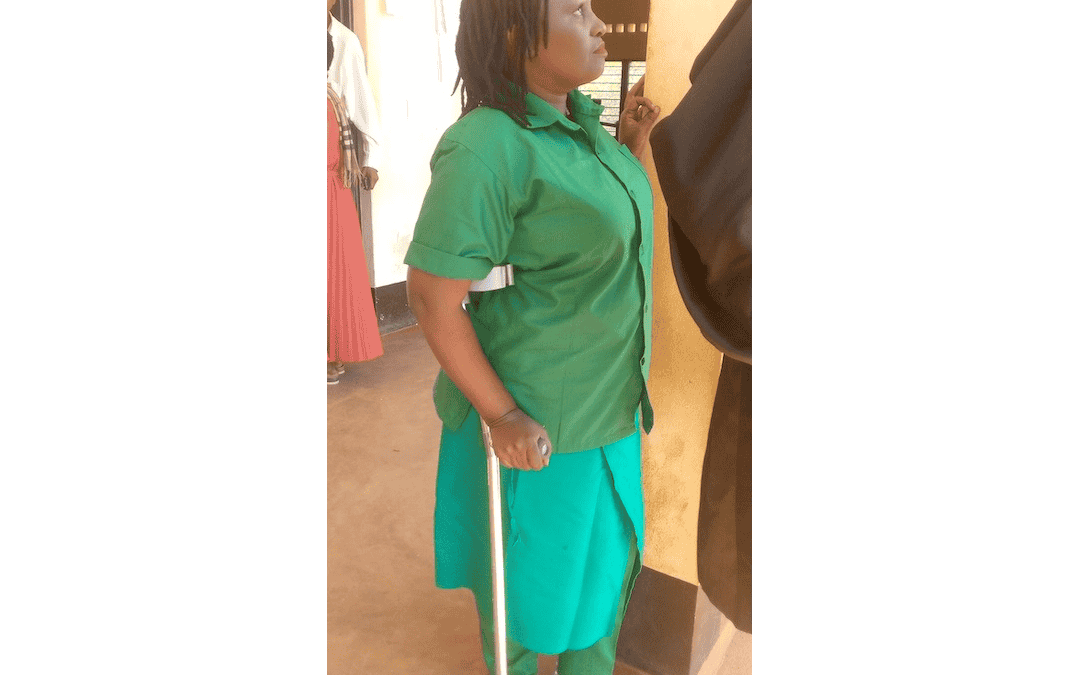
One month. That is the new deadline for learning the fate of Burundian journalist Sandra Muhoza of the online media outlet La Nova. The decision is scheduled following her appearance on Friday, February 20th, at the Ngozi Court of Appeal. Nearly two years after her imprisonment, this mother of three had been sentenced to four years in prison. She has appealed, but time and the harsh conditions of detention appear to have taken their toll on her health. Today, Sandra Muhoza struggles to walk with the aid of a crutch due to an illness that is consuming her and weakening her day by day. Locked up in the women's prison in Ngozi, in the north of the country, she is still unable to receive adequate treatment, even though, according to her relatives, she needs urgent surgery. Ukweli Coalition Media Hub was present at her last court appearance.
By Ukweli Coalition Media Hub
After more than two hours of hearings in a packed courtroom, Sandra Muhoza appeared physically weakened, walking with a crutch but ready to defend herself: “I am innocent,” she repeated throughout the hearing of her appeal, which took place on 20 February at the Court of Appeal in Ngozi, in the north of the country, recalling that “she was forced to sign papers incriminating her in an intelligence service cell in Bujumbura at 2 a.m. on the day of her arrest, while she was blindfolded”. She then went on to explain the reason for her arrest: “It all started with me and other members of a WhatsApp group of journalists making comments about a speech given by Firmin Sinzoyiheba in 1996, when he was Minister of Defence, in which he condemned the distribution of machetes and rifles to the population by certain high-ranking officials in the country.” Comments made because of an almost similar topic circulating on social media right now, that of a possible distribution of machetes to the Imbonerakure, youth of the ruling party, by the regime.
Sandra was arrested in April 2024 and then sentenced on 16 January 2026 to four years in prison and a fine of two hundred thousand Burundian francs (approximately 67 US dollars) by the Ngozi High Court, where she was transferred on 26 September 2025 after more than a year and a half in Mpimba prison in Bujumbura, the economic capital, accused of “undermining territorial integrity and racial hatred” in a trial deemed unfair by several voices and organisations, including the Burundian Union of Journalists (UBJ), which described the sentence as “a serious violation of human rights and press freedom, especially since the charges against the journalist appear to be without solid foundation”.
Judith Basutama, secretary general of the UBJ, explains that “accusing Sandra Muhoza of undermining state security for messages exchanged with colleagues in a WhatsApp group has no credible legal basis. It is difficult to understand how a journalist, who is also ill, can be considered a threat to state security. This charge is often used in similar contexts to silence voices deemed disruptive, in the absence of any clearly established offence.” For her, “this conviction reflects a clear desire on the part of the Gitega authorities to silence media professionals, making Sandra Muhoza an example to deter all Burundian journalists, in violation of freedom of the press and freedom of opinion”. This does not help the government, whose “image is already tarnished by numerous other cases of human rights violations. It should be noted that the President of the Republic now holds the presidency of the African Union.”
“A trial that violates Burundian law”
“This case presents several irregularities with regard to the guarantees provided for by Burundian law,” says Jeanne d'Arc Zaninyana, lawyer and president of the Movement of Women and Girls for Peace and Security in Burundi (MFFPS), who points out that “Sandra Muhoza's first conviction was handed down by a court that was subsequently declared territorially incompetent by the Court of Appeal. Under Burundian law, such a decision renders the initial proceedings null and void and, in principle, requires the release of the person concerned. However, Sandra Muhoza remained in detention under a new warrant, despite this judicial nullity.” She adds: “This also raises serious concerns under international human rights law, to which Burundi is a party. Her detention after the Court of Appeal overturned the first proceedings amounts to arbitrary detention, which is prohibited by the International Covenant on Civil and Political Rights, which guarantees the right to liberty and security of person. When proceedings are declared null and void by a competent court, continued detention without a clear legal basis contravenes this principle.”
Beyond being deprived of her freedom, Sandra, separated from her three children, is now fighting an additional battle for her physical and psychological health. “When she went to a hospital in Bujumbura to be diagnosed, the scan revealed a defect in her spine. The test results showed that she needed hip surgery,” reveals a relative, who points out that Sandra now suffers from severe lower back pain, forcing her to walk with a crutch. This diagnosis was confirmed by Eric Ntibandetse, one of her lawyers, who was contacted by Ukweli Coalition Media Hub.
A situation aggravated by the conditions of her detention, which also affected her psychological health, according to a relative: “We have learned that Sandra is under surveillance even inside the prison. She has chosen to retreat into almost total silence, preferring to stay away from other inmates in order to avoid any trouble. Traumatised, she sometimes even refuses to see visitors today.”
“As of now Sandra is the only female journalist being arbitrarily detained in sub-Saharan Africa.”
This reminder comes from Reporters Without Borders (RSF), which, when contacted by Ukweli Coalition Media Hub, highlighted the absurd nature of the case: “In December 2024, Sandra Muhoza was sentenced to 21 months in prison in the first instance. With the recent verdict, the journalist's sentence has therefore doubled,” said Camille Montagu, a researcher at RSF's Sub-Saharan Africa desk, before commenting on the regime's deaf ear to multiple calls for the journalist's release: “At a press conference held on 1 December, the Head of State was asked about the possibility of a presidential pardon for Sandra Muhoza. He seemed completely unaware of the journalist's fate. This shows the authorities' total disregard for the multiple calls for Sandra's unconditional release and, more broadly, for press freedom in the country. Unfortunately, Sandra is not the first female journalist to be imprisoned in Burundi. Floriane Irangabiye also spent nearly two years in prison before being released in August 2024. These arbitrary detentions allow the authorities to keep the rest of the profession under pressure.”
The new verdict is expected on 20 March. Between hope and pessimism, Eric Ntibandetse, one of the journalist's lawyers, hopes that the recent court appearance will be the last. “We remain hopeful that she will finally be released,” he said after the hearing. Published by the Committee to Protect Journalists in December 2025, no fewer than 127 African female journalists wrote a joint letter expressing their solidarity with Sandra Muhoza and demanding her release.
PS: A few hours after the publication of our report on Sandra Muhoza's detention, the journalist was provisionally released. This was a relief for her family, but also for journalists' rights organizations, which nevertheless continue to demand her full release and the annulment of her conviction.
Thierry Banga Lole, a journalist and cameraman working in Bunia was fatally attacked by unknown individuals on 28 December 2025. In response to this killing, organizations defending journalists' rights have called for an independent, credible, and transparent investigation, citing this incident as evidence of the multiple challenges journalists continue to face, ranging from ordinary crime to state violence. The police, meanwhile, claim that the killing was the result of an attack by bandits that went wrong.
By Ukweli Coalition Media Hub
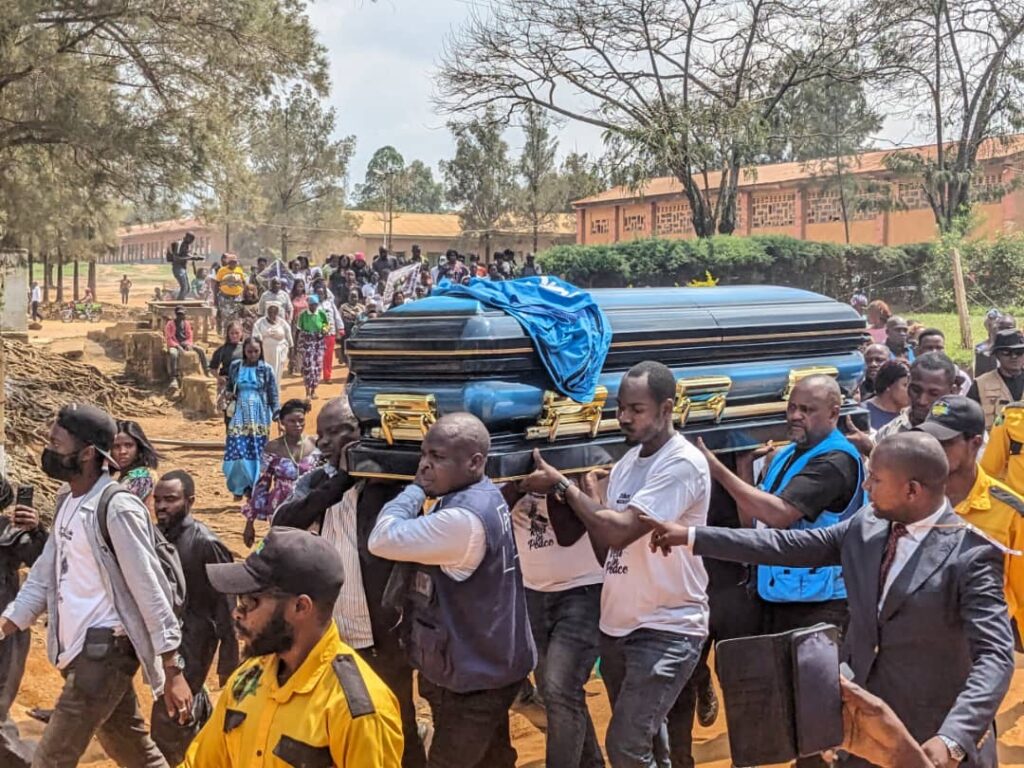
On the night of December 28–29, 2025, in the heart of Bunia, the capital of Ituri Province in northeastern Democratic Republic of the Congo, Radio-Télévision Nationale Congolaise (RTNC) journalist and cameraman Thierry Banga Lole was fatally attacked at his home, located in the Hoho neighborhood of Mbunya commune.
This killing happened at a time of heightened security, tensions and militarization of the provincial administration. No valuables were taken by the assailants. Only bloodstains and machete wounds on the victim’s head. From early on, the authorities framed the incident as the result of a robbery, as Bunia is a city regularly plagued by nighttime attacks and armed violence.
According to the official version provided by the Congolese National Police (PNC), Lole was attacked by bandits armed with bladed weapons. “Two of the four suspects in a targeted operation have already been arrested,” announced the PNC's urban commander in Bunia, Senior Commissioner Gérard Abeli Mwangu, on January 1, 2026. Two weeks later, on January 13, 2026, all four alleged assassins were officially presented to the military governor of Ituri by the provincial commissioner of the Congolese National Police, Commissioner Ngo Isengelo.
"A few weeks ago, the city was shaken by the assassination of a journalist. According to the police, the investigation into this crime led to the arrest of four suspects initially, which then led to the arrest of a dozen more people. Among those presented, several are soldiers," Senior Commissioner Gérard Abeli Mwangu later told the military governor.
However, organizations that defend journalists' rights do not believe this narrative. For Journalists in Danger (JED) and the National Union of the Press of Congo (UNPC), this death is a symptom of the pressure that media in the east of the country faces, where, in their words, “coverage of security, military, and political issues remains particularly sensitive.” The two organizations organized a protest march in Bunia, which ended in front of the governor's office. The governor said that investigations were already underway, and the results would be made public.
Born on October 7, 1989, in Bibwa, Thierry Banga Lole began his career as a cameraman in the early 2010s before being recruited in 2018 as a staff member at RTNC, the national television station. He was a father of five children, and was known for his discretion, having been called upon on several occasions to cover official activities and community events, and to make occasional trips to high-risk areas.
A journalist whose name had appeared in a military court file
In early 2025, Lole’s name appeared in a case handled by the military justice system. He was suspected of having ties to the Convention for the Popular Revolution (CRP) militia, created in March 2025 by Thomas Lubanga, a close family member. He was then placed under judicial supervision and required to sign in regularly. His assassination occurred while he was banned from leaving Bunia, a restriction that had lasted more than eight months. The investigation lasted several months but yielded no results. According to one of his colleagues, the case was closed in November. Thierry was also suspended from his duties at RTNC, but at the time of his death, he had been reinstated, as Benx Katonji, provincial director of RTNC in Ituri, confirmed when contacted by Ukweli.
According to multiple local sources, Thierry was also among the founders of the WhatsApp group “La Voix de l’Ituri” (The Voice of Ituri), a popular forum where journalists, civil society members, and political actors often commented critically on provincial governance, security management, and actions by the authorities during the state of siege.The WhatsApp group shared the same name as an online media outlet, lavoixdelituri.net, that Lole was known to have co-founded.
“It was a group he was forced to shut down after appearing before the military prosecutor,” a colleague confirmed. However, to date, nothing suggests a direct link between his journalism work and his assassination. Still, several local actors believe he had attracted unwanted attention, given how visible the WhatsApp forum was in a politically sensitive area. “Since that episode, he kept saying he no longer felt safe,” a close friend recalled.
“The military does not share information. In a context like ours, under a state of siege, it is always difficult to assess the seriousness of the danger facing a colleague or a loved one. Military courts play a central role in maintaining public order, and this type of proceeding is sometimes far from trivial,”another colleague commented.Ukweli unsuccessfully tried to reach Colonel Magistrate Kumbu Ngoma Jean Baptiste, Attorney General of the Superior Military Prosecutor’s Office in Ituri, who local sources said was in charge of the late journalist’s case.
Ituri has been a state of siege for several years, with a military governor from the FARDC and an administration largely controlled by the security forces. Officially, this measure is intended to curb violence by armed groups. “In reality, targeted killings, armed attacks, and settling of scores remain frequent, including in urban areas,” says Dieudonné Lossa, coordinator of Ituri Civil Society. Journalists are not spared. In this area, media representatives say that attacks against journalists are on the rise.
The Provincial Civil Society Coordination Group points out that several recent murders remain unsolved, hinting at a state of chronic impunity. “The population is tired of impunity,” warns Dieudonné Lossa.
At Thierry's funeral on January 5, Sylvie Musoke, a member of the National Union of the Press of Congo (UNPC)’s Ituri Section executive committee, categorically stated, “Journalism is not a crime. No journalist should die for doing their job.” With her voice breaking, Musoke went on to say, “You can kill the man, but you cannot kill the truth. The camera may fall, but the light will not”. Also speaking at the funeral, Freddy Upara, JED focal point member, reminded those present that killing a journalist is an attempt to silence the truth.
UNPC, JED, and other journalist and media support organizations in the region are calling for an independent, credible, and transparent investigation into the killing.
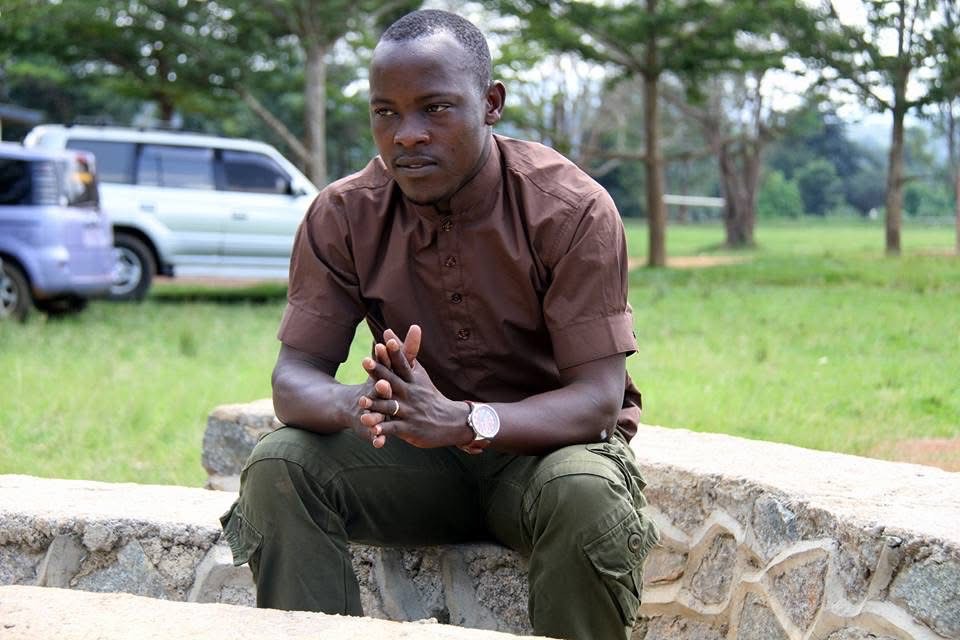
Franck* (a pseudonym for security reasons) is an investigative journalist based in eastern Democratic Republic of Congo, a region plagued by several armed groups, including the M23 movement, which currently controls a large part of the territory. Franck's continued practice of journalism is fraught with peril. Having lost loved ones during the various armed conflicts, he is now forced to practice "anonymous journalism" for his own safety, not to mention the daily pressure he faces to join the armed groups. A testimony.
By Armel-Gilbert Bukeyeneza
Founding Director of Ukweli Coalition Media Hub
It was a black day in his career. A day when everything almost changed, when he was tempted to throw down his camera and take up weapons. Franck* (his real name has been changed) was still a young reporter, 26 years old, with three years of experience, when his newsroom sent him to cover an attack in 2021 that had just occurred in his village in eastern DRC. Franck was born and raised in war, one might say. He had seen and endured everything, "too much", considering his age. But this time, he had no idea what awaited him. While his village counted its dead, and he, nervous but focused, captured images of the terrible attack, of children dying and bodies still bleeding from the blasts, a friend pats on his shoulder. “Can’t you see you’re photographing your own cousin?” The pointed warning falls on deaf ears. Franck remains impassive. He snaps shot after shot with the cool composure of a war correspondent. His friend is forced to wrest the camera from him. “The body lying in front of you is your own cousin!” Words as sinister as they are unexpected, bringing Franck to the brink of fainting while his friend suggests he steps back – in vain. He is forced to pull Franck by the arm and find him a chair to rest. The day before, just under twenty hours earlier, Franck and his cousin had spent the evening with their family, having drinks and dinner together.
“Can you imagine covering a bomb attack where almost half of the twenty victims (eight wounded and one dead) are members of your family? For the first time, I doubted the ability of journalism to bring any change to my community. I felt so powerless that I was ready to take up arms and fight,” he confesses today. Against all odds, Franck ended up becoming an investigative journalist, unfortunately forced by circumstances to work anonymously, and is now a journalist for a community media outlet. When meeting him during a training session, he seems more determined than ever. Calmly, he first offers a slight smile whenever asked to comment on the news in his country. A smile as mysterious as it is revealing. “It’s not easy, man,” is his go-to opening line, whenever he wants to deliver a harsh truth about the practice of journalism in his region. “We have several journalists who have joined the various rebel movements. It’s the rebel leaders themselves who come looking for us, mainly to help them with PR to legitimize their taking up arms. And it’s sometimes hard to refuse. Some of these leaders are old school friends. Most of the groups they lead claim to be defending our communities and ethnic groups, and some journalists sometimes fall into these traps. Furthermore, these rebel leaders may think you know too much about them. In such cases, turning your back on them can prove very risky”.
And what about Franck himself ? “Oh, man! I’ve been approached several times. And it doesn’t stop.” Franck adds another, well-known fact: “These groups have access to the country’s resources. They control mining operations and are involved in all sorts of illegal trafficking. They’re rich. When you know the financial state of the media and journalists in the DRC, you’ll understand why their offers can sometimes be hard to refuse. Personally, I spent three years earning less than ten dollars a month in a newsroom. In the DRC, a journalist is easy to buy. You understand why they’re being used as propaganda tools to spread fake news, which, in turn, fuels the armed conflicts on the ground. Our precarious situation makes us easy to manipulate. If it’s not armed groups, it’s politicians. Or both. They’re sometimes even linked.”
A childhood dream
The fact that Franck is still a journalist, and even an investigative one, is perhaps no coincidence. Journalism is a childhood dream he’s fighting to live: “I’ve always had great admiration for journalists. I saw how they fought to make our voices heard. I was still a kid, but their determination to stand up for the community when almost everything was against us, in a context of war, left a deep impression on me.” Franck officially entered journalism in 2018, defying his parents’ wishes for him to become an engineer, a less “controversial” and less risky profession than journalism. A profession that, obviously, pays better than journalism in the DRC. “I have a lot of respect for engineers, but it’s not for me. I’ve always wanted to be a voice for my community. I started speaking on the radio when I was 15, on entertainment programs.”
Admiration or idealization? Franck would eventually get to the bottom of that question when, in 2021, he found himself in a position of responsibility at a government-affiliated media organization. “Most of the journalists who were working there, were in this position because political actors or authorities had pulled some strings. Journalism isn’t just about accepting guidance from your editor; it’s also about accepting criticism. There was none of that. Just contempt from the young reporters who were still learning how to handle a camera.” Yet, he laments today, the organization had the resources. “Something most newsrooms lack. A real waste in my eyes because the organization had all the potential to make a difference.”
Seven years after officially entering journalism, Franck seems to have lost none of his commitment, much less his admiration for journalism, despite the calls and pressure to join the armed groups operating in his region. Franck is one of the journalists behind the investigation, published last July, into the illegal cocoa trade between the DRC and Uganda, involving armed groups, the armies of both countries, businessmen, and state agents. This investigation earned Ukweli Coalition Media Hub a nomination from Reporters Without Borders for its2025 Press Freedom Awards. Just a few weeks after publication, the investigation appears to have prompted a series of measures taken by the authorities, either to ensure the protection of farmers or to prohibit taxes deemed illegal on cocoa sales, asreportedby local media outlets.
With a calmer voice and a nuanced yet still concise tone, Franck shares the survival strategy for journalists today working in conflict zones like eastern DRC: “We have an extremely sensitive task: to report in a context of war. Impartiality and neutrality must be our watchwords, our compass. They are our shield in terms of security and legal protection.” Words that, when applied to the reality on the ground, remain difficult to put into practice, he acknowledges: “It’s complicated to demand neutrality from a journalist who can’t even pay their rent, even if neutrality is for their own safety. We need support, a certain financial stability. It’s an important pillar for working independently and guaranteeing quality reporting. And it’s certain that this support won’t come from political actors, much less from armed groups.”
Entitled “Eastern DRC: War crimes committed against the press…”, the annual report of the organization “Journalist in Danger” (JED), published last November, revisits the damning record of attacks on media and journalists over the past twenty years in Eastern Democratic Republic of Congo: twenty journalists killed out of a total of 2670 attacks, which combines the assassinations of journalists, those who have disappeared, have been detained, and media that have been destroyed. Alerting the public to the current phenomenon of "forced recruitment of journalists under the guise of ideological training, in training camps where they learn to handle weapons," primarily in the South and North Kivu provinces controlled by the M23 Movement, the organization lists a whole series of predators of press freedom spanning the last two decades: "While under President Joseph Kabila, the main perpetrators of attacks against journalists and the media were essentially limited to the security services, Congolese intelligence, and national or provincial authorities, under the new head of state, activists from various political parties (both the current government and the opposition) are also among the executioners of press freedom. Furthermore, militias and armed groups in the eastern provinces of the country, under rebel control, have been added to the list of main perpetrators."